
In the modern digital hospital environment, the traditional barcode wristband is evolving. While barcodes require line-of-sight scanning—often waking sleeping patients or struggling with wrinkled bands—RFID Patient Wristbands offer a non-intrusive, 360-degree data capture solution. This transition is not just about convenience; it’s about eliminating medical errors and optimizing clinical workflows.
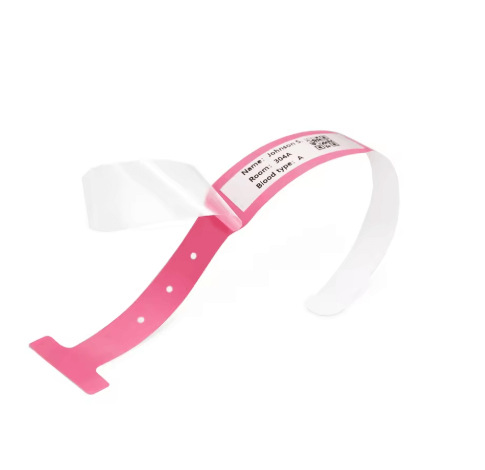
1. Seamless Integration with Hospital Information Systems (HIS)
RFID technology acts as the physical bridge to your digital records. By utilizing Automated Patient ID systems, clinicians can verify patient identity, medication schedules, and surgical sites without physical contact.
- Real-time Synchronization: Every RFID chip is linked to the electronic health record (EHR), ensuring that any update in the system is immediately reflected at the point of care.
- Hands-Free Verification: Unlike barcodes, RFID can be read through blankets or clothing, allowing nurses to verify IDs without disturbing the patient’s rest.
2. Enhancing Patient Safety and Workflow Efficiency
The primary driver for RFID adoption in North American and European hospitals is the reduction of “Never Events”—errors that should never happen in a healthcare setting.
- Anti-Abduction & Wander Management: For pediatric and geriatric (dementia) wards, RFID wristbands trigger alerts if a patient nears an unauthorized exit, providing a vital layer of Patient Safety Technology.
- Surgical Site Verification: Automated checks ensure the right patient is in the right operating room for the right procedure, satisfying strict JCI and national safety protocols.
3. Technical Durability and Biocompatibility
A medical-grade RFID band must survive the rigors of a clinical environment. Professional-grade bands are engineered with:
- Advanced Encapsulation: The RFID inlay is protected against moisture, ensuring functionality during bathing or hydrotherapy.
- Medical-Grade Materials: Utilizing Latex-Free & Hypoallergenic polymers prevents skin irritation during long-term stays, which is a critical metric for patient satisfaction scores.
4. Improving ROI through Automated Data Capture
While the initial cost of RFID may be higher than traditional thermal bands, the Return on Investment (ROI) is realized through time savings. Nurses save an average of 15–20 minutes per shift by eliminating manual scanning hurdles, allowing more time for direct patient interaction.
Why Choose Fulida for Your RFID Healthcare Solutions?
As a global leader in precision identification products, Fulida specializes in high-performance RFID Patient Wristbands that bridge the gap between technical reliability and patient comfort. Our RFID solutions are engineered with ultra-soft, medical-grade materials and high-sensitivity inlays that ensure 100% read rates even in high-interference hospital environments. Whether you require UHF for long-range tracking or HF/NFC for secure, close-range verification, Fulida provides factory-direct customization to meet your specific HIS requirements. We understand the stringent demands of modern healthcare procurement—offering RoHS-certified, latex-free, and tamper-evident designs that guarantee both data integrity and patient safety. Partner with Fulida to transition your facility into a smart, “zero-error” environment.
[Contact our technical team today for a custom sample kit and a competitive B2B quote.]
Mailbox: fld@fulida888.com WhatsApp: 13924617781