Introduction
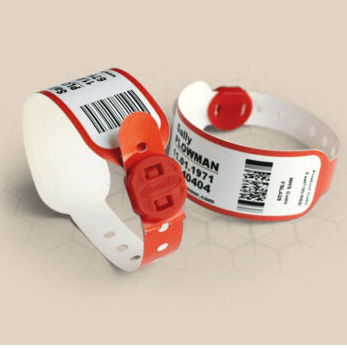
In the United States healthcare system, patient identification errors remain a major compliance and safety risk. Thermal printing medical wristbands are widely used across hospitals, emergency departments, laboratories, and outpatient clinics due to their speed, accuracy, and integration with EHR systems. Choosing wristbands that are fully compatible with thermal printers is essential to meet Joint Commission, HIPAA, and FDA labeling expectations.
Printer Compatibility in the US Market
US hospitals primarily rely on direct thermal printers from Zebra, SATO, Honeywell, and Brady. Common models include Zebra ZD410/ZD620 and ZT series for central admissions.
Direct thermal printing is preferred for:
- Rapid patient admission
- On-demand bedside printing
- Reduced consumables (no ribbon)
Thermal transfer is occasionally used in laboratories requiring extended chemical resistance.
Material Selection for US Hospitals
- Vinyl Wristbands: Ideal for inpatient, ER, and ICU use. Resistant to alcohol wipes, sanitizers, and moisture.
- PET Wristbands: Suitable for long-stay patients and laboratory environments requiring high barcode durability.
- Tyvek Wristbands: Limited to short-term outpatient or visitor identification.
Regulatory Considerations
- HIPAA: Patient data legibility and barcode accuracy
- Joint Commission: Positive patient identification
- FDA UDI guidance (where applicable)
Fulida Case Study – US Hospital Network
A regional hospital network experienced barcode scan failures after 48 hours due to incompatible wristband coatings. Fulida provided direct thermal–optimized vinyl wristbands, improving scan rates to over 99.8% and reducing reprint events by 42%.
Why Choose Fulida – United States
Fulida wristbands are engineered for US-standard thermal printers, validated under alcohol exposure, hand hygiene protocols, and 300+ scan cycles.