
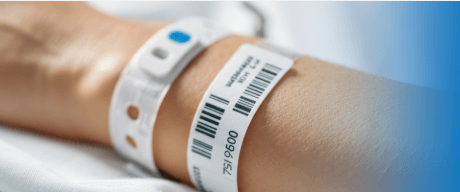
Thermal Printing Medical Wristbands are a critical component of modern healthcare identification systems. In hospitals, clinics, and laboratories, patient ID wristbands must integrate seamlessly with thermal printers to ensure accurate, durable, and scannable information throughout the patient journey. Printer compatibility is not only a technical consideration but also a patient safety issue, as barcode failures or print degradation can directly impact clinical workflows.
Healthcare facilities increasingly rely on direct thermal and thermal transfer printing technologies to produce Patient ID Wristbands at admission, registration, and specimen collection points. Selecting wristbands that are fully compatible with existing thermal printing systems is essential to maintain workflow efficiency and reduce identification errors.
Core Materials Used
Thermal Printing Medical Wristbands are primarily manufactured from PET and vinyl-based materials engineered for controlled heat response and print stability.
PET Medical Wristbands are widely used in direct thermal printing applications due to their smooth surface and uniform coating. PET materials support high-resolution text and barcode printing, making them suitable for barcode-driven medication administration and laboratory workflows.
Vinyl Medical Wristbands are also used in thermal printing environments, particularly when extended wear duration and higher mechanical durability are required. Medical-grade vinyl wristbands are typically produced as Waterproof Latex-free Wristbands, ensuring patient comfort and safety.
Tyvek wristbands are generally not recommended for thermal printing medical applications due to limited heat resistance and inconsistent print quality.
Material Performance Characteristics
Thermal sensitivity and coating uniformity are key performance factors for Thermal Printing Medical Wristbands. Materials must respond consistently to printer heat settings to produce clear, high-contrast output without over-darkening or fading.
Barcode durability is essential. Barcode Wristbands must remain scannable after exposure to handwashing, alcohol wipes, and disinfectants commonly used in healthcare environments. PET and vinyl wristbands engineered for thermal printing provide superior barcode longevity compared to paper-based alternatives.
Mechanical durability and waterproof performance ensure wristbands remain intact during daily patient activities. Waterproof Latex-free Wristbands reduce replacement frequency and minimize workflow disruptions.
Printer Compatibility Considerations
Most healthcare facilities use direct thermal printers for wristband printing due to speed and simplicity. Common printer platforms require wristbands with precise coating formulations to ensure consistent print density and barcode accuracy.
Thermal Printing Medical Wristbands must be compatible with standard printer sensors, platen pressure, and heat settings. Poorly matched materials can result in barcode distortion, smudging, or premature fading.
Fulida wristbands are engineered for compatibility with widely used healthcare thermal printers without requiring hardware modification, supporting smooth integration into existing workflows.
fulida Case Study — Thermal Printing Workflow Optimization
A multi-site healthcare provider experienced inconsistent barcode scan performance across different departments. Wristbands printed on older thermal printers showed fading within 48 hours, leading to manual patient verification.
Fulida conducted a printer-material compatibility assessment and recommended PET-based Thermal Printing Medical Wristbands with optimized coating thickness. Printer heat settings were standardized across sites to match the wristband specifications.
After implementation, barcode scan reliability improved, wristband replacement rates decreased, and clinical staff reported smoother admission and medication administration workflows.
Material Parameter Table
| Parameter | PET Thermal Wristbands | Vinyl Thermal Wristbands |
|---|---|---|
| Thermal Print Clarity | Very High | High |
| Barcode Durability | Very High | High |
| Waterproof Performance | Excellent | Excellent |
| Chemical Resistance | High | High |
| Recommended Use | Clinics, Labs | Hospitals, Inpatient Care |
| Typical Wear Duration | Short to Medium Term | Medium to Long Term |
Application Scenarios Across Healthcare
In hospitals, Thermal Printing Medical Wristbands support patient admission, bedside medication verification, and surgical safety checks.
Clinics rely on PET-based wristbands for fast check-in and high barcode accuracy.
Laboratories use thermal wristbands to maintain specimen traceability from collection through analysis.
FAQ
What is the difference between direct thermal and thermal transfer wristbands? Direct thermal wristbands use heat-sensitive coatings, while thermal transfer wristbands rely on ribbon-based printing. Direct thermal is more common in healthcare wristband applications.
Which material works best with thermal printers? PET Medical Wristbands provide the most consistent thermal print performance and barcode clarity.
Can thermal wristbands be used in wet environments? Yes. PET and vinyl Thermal Printing Medical Wristbands are designed to be waterproof and chemical-resistant.
Why Choose Fulida
Fulida is an experienced OEM manufacturer of Thermal Printing Medical Wristbands with deep expertise in material engineering and printer compatibility. By aligning wristband materials with real healthcare printing workflows, Fulida helps medical facilities reduce identification errors and improve operational efficiency.
Fulida provides PET and vinyl wristband solutions engineered for reliable thermal printing, barcode durability, and patient safety across global healthcare environments.