
The Future of Patient Safety: Implementing RFID Medical Wristbands in Canadian Healthcare
In the sophisticated healthcare landscape of Canada—where clinical excellence meets stringent regulatory oversight—the methods of patient identification are undergoing a digital transformation. From the advanced research hubs in Toronto’s University Health Network to community-focused care in Vancouver, RFID Medical Wristbands Canada are replacing legacy barcode systems as the new standard for “zero-error” patient safety.
As Canadian healthcare facilities strive to enhance operational efficiency while maintaining compliance with provincial health mandates, Radio Frequency Identification (RFID) offers a non-intrusive, 360-degree data capture solution that traditional thermal bands simply cannot match.
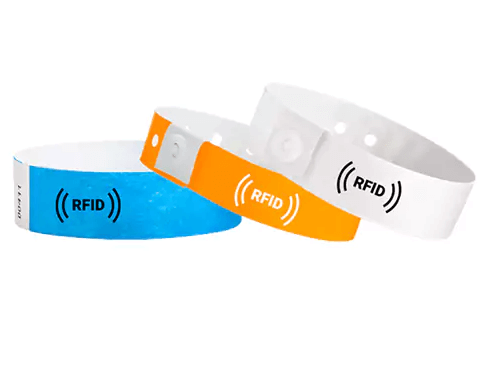
1. Regulatory Alignment: Navigating Health Canada and CSA Standards
For Canadian procurement officers and Chief Medical Information Officers (CMIOs), the primary filter for any new technology is regulatory adherence. Unlike consumer-grade RFID tags, medical-grade solutions must be designed for clinical environments.
- Biocompatibility and Safety: Every wristband must be Latex-Free & Hypoallergenic. This is crucial for Canada’s diverse patient population, ensuring that neonatal, pediatric, and geriatric patients—who often have sensitive skin—are not at risk for adverse reactions during long-term stays.
- Compliance with PIPEDA: In Canada, data privacy is paramount. RFID systems must comply with the Personal Information Protection and Electronic Documents Act (PIPEDA). Professional RFID solutions utilize encryption to ensure that patient data remains secure during wireless transmission.
- Frequency Compliance: RFID systems in Canadian hospitals must operate within the approved Industry Canada (IC) frequency bands to avoid interference with other critical life-support equipment, such as ventilators and heart monitors.
2. Real-Time Insights: Beyond Simple Identification
The shift toward Hospital RFID Solutions is driven by the need for real-time visibility. While a barcode requires a “line-of-sight” scan—often requiring nurses to wake sleeping patients to find the band—RFID enables “invisible” verification.
Key Benefits for Clinical Workflows:
- Automated Patient ID Verification: Nurses can verify patient identities and medication schedules without physical contact, significantly reducing the risk of cross-contamination and improving hygiene protocols.
- Wander Management & Anti-Abduction: For dementia wards or neonatal units, RFID wristbands act as a vital safety net. Integrated with hospital egress systems, they can trigger immediate alerts or lock doors if a patient nears an unauthorized exit.
- Surgical Site Accuracy: Automated checks ensure the right patient is in the correct operating room for the intended procedure, satisfying strict patient safety protocols governed by Accreditation Canada.
3. Technical Resilience: Engineered for the Front Lines
A medical-grade RFID band must survive the rigors of hospital life. Smart Patient ID solutions are not just about the chip; they are about the materials that protect it.
- Scan-Positive Durability: The bands must withstand constant exposure to 75% isopropyl alcohol, betadine, and heavy-duty sanitizers used in Canadian hospitals. High-performance RFID bands feature a multi-layer nano-coating that protects both the thermal print and the internal RFID inlay.
- Point-of-Care (POC) Compatibility: Seamless integration is essential. RFID solutions must be compatible with existing thermal printer fleets—such as Zebra, Honeywell, or SATO—allowing hospitals to transition to RFID without a total hardware overhaul.
4. Driving ROI in the Canadian Public and Private Tiers
While the initial per-unit cost of RFID is higher than traditional bands, the Automated Healthcare ID workflow offers a massive Return on Investment (ROI) through time savings and error reduction.
- Nurse Efficiency: Studies show that automated ID verification saves clinical staff an average of 15-20 minutes per shift. In the context of Canada’s nursing shortages, this allows staff to refocus their time on direct patient care rather than administrative scanning hurdles.
- Asset and Inventory Linkage: By linking patient ID with high-value assets (like infusion pumps), hospitals can track the utilization of equipment per patient, providing deeper insights into cost-per-treatment and resource allocation.
Why Choose Fulida for Your RFID Healthcare Solutions in Canada?
As a global leader in precision identification technology, Fulida is proud to offer high-performance RFID Medical Wristbands specifically designed for the North American market. We understand that Canadian procurement managers require more than just a product; they require a partner that understands Health Canada Compliance and the logistics of serving a geographically vast nation. Fulida’s RFID wristbands are manufactured using ultra-soft, medical-grade synthetic materials that prioritize patient comfort while ensuring 100% read rates in high-interference clinical environments. Our high-sensitivity inlays are compatible with both HF/NFC for secure, close-range verification and UHF for long-range tracking and wander management. With factory-direct customization, we provide tamper-evident designs and custom-printed logos that satisfy the most stringent security protocols of Ontario Health, Alberta Health Services, and beyond. Whether you are a large metropolitan health authority or a specialized private clinic, Fulida delivers the scale, quality, and technical support necessary to transition your facility into a “smart,” zero-error environment.