
Introduction
Large-scale stadium events present complex access control challenges. Tens of thousands of attendees often enter through multiple gates within narrow time windows, creating pressure on admission systems and increasing the risk of unauthorized entry. Traditional paper tickets and visual wristband checks are vulnerable to duplication, transfer, and human error, particularly in high-traffic environments.
As sports venues in North America adopt more digital ticketing and integrated security systems, physical identifiers must evolve accordingly. RFID-enabled vinyl event wristbands have emerged as a reliable solution that combines durable materials with contactless identification technology. By embedding RFID inlays into vinyl substrates, these wristbands enable fast, automated verification while maintaining resistance to tampering and environmental stress.
This article examines how RFID-enabled vinyl event wristbands reduce unauthorized entry risks in stadium environments, focusing on material engineering, performance characteristics, and practical deployment strategies aligned with professional event operations.
Core Materials Used
The effectiveness of RFID-enabled vinyl event wristbands depends on the integration of materials and electronic components engineered specifically for stadium use.
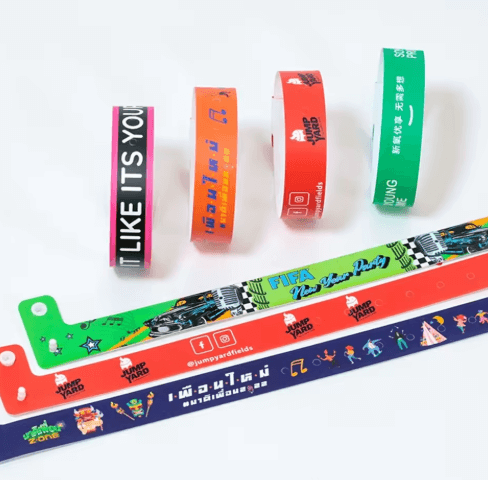
The primary substrate is vinyl, selected for its flexibility, waterproof properties, and high tear resistance. Vinyl wristbands maintain structural integrity during extended wear, making them suitable for multi-day tournaments, season passes, and VIP access programs. Unlike paper-based alternatives, vinyl resists stretching and deformation, reducing the likelihood of transfer between individuals.
Embedded within the vinyl layers is an RFID inlay, typically operating at HF (13.56 MHz) or UHF frequencies depending on the stadium’s access control infrastructure. The inlay consists of an antenna and microchip laminated to protect against mechanical stress and moisture ingress. This encapsulation ensures consistent read performance even in outdoor venues exposed to rain or humidity.
A secure closure mechanism completes the assembly. One-way snap or rivet-style closures are commonly used to prevent removal without visible damage. This mechanical security complements RFID-based verification, creating a dual-layer defense against unauthorized entry.
Material Performance Characteristics
For stadium applications, RFID-enabled vinyl event wristbands must meet demanding performance requirements that extend beyond basic identification.
Durability is a critical factor. Vinyl substrates withstand continuous friction, sweat, and exposure to weather conditions without degrading. This durability ensures that the RFID inlay remains properly aligned and functional throughout the event lifecycle.
RFID performance stability is equally important. The material stack-up is engineered to minimize signal attenuation caused by the vinyl layers or proximity to the human body. Consistent read ranges allow access control readers to authenticate attendees quickly, reducing gate congestion and minimizing manual intervention.
Tamper resistance is enhanced through irreversible closures and visible damage indicators. Any attempt to remove or reuse a wristband results in clear evidence of manipulation, supporting on-site enforcement by security personnel.
Compatibility with backend systems is another key characteristic. RFID-enabled vinyl event wristbands are designed to integrate seamlessly with ticketing platforms, turnstiles, and analytics systems commonly used in professional sports venues across North America.
fulida Case Study — Stadium Event Application
A major North American sports stadium hosting professional football and large concert events faced recurring issues with unauthorized re-entry and wristband sharing during sold-out games. Visual inspection alone proved insufficient, particularly during peak entry periods when staff prioritized speed over detailed checks.
The stadium required an access control solution that could integrate with its existing RFID ticketing infrastructure while maintaining physical durability for all-weather use. Fulida worked with the venue’s operations and IT teams to deploy RFID-enabled vinyl event wristbands for general admission and premium seating sections.
The wristbands were encoded with unique identifiers linked to ticket records and access permissions. Vinyl material selection focused on waterproof performance and mechanical strength, while HF RFID inlays were optimized for short-range, high-accuracy reads at turnstiles.
Following implementation, the stadium reported a significant reduction in unauthorized entry attempts. Automated verification reduced reliance on manual checks, improved gate throughput, and provided real-time attendance data for operations management. The wristbands also supported post-event analysis, helping the venue refine staffing and entry flow strategies.
Material Parameter Table
| Parameter | Specification |
|---|---|
| Substrate Material | Vinyl |
| RFID Frequency | HF 13.56 MHz or UHF (optional) |
| Inlay Protection | Laminated, moisture-resistant |
| Closure Type | One-way snap or rivet |
| Water Resistance | Fully waterproof |
| Wear Duration | Single-day to multi-day events |
| Read Compatibility | Standard RFID access control systems |
| Customization | Color, print, encoding, UID mapping |
Application Scenarios Across Stadium Events
In stadium events, RFID-enabled vinyl event wristbands are widely used for general admission control, VIP lounges, and restricted staff zones. Their durability supports outdoor sports such as football, baseball, and motorsports, where weather exposure is unavoidable.
For multi-day tournaments and festivals hosted within stadium complexes, vinyl wristbands allow continuous access without reissuance. RFID functionality enables differentiated permissions, allowing organizers to manage seating tiers, hospitality access, and merchandise redemption within a single system.
Beyond sports, these wristbands are also applied to large-scale concerts and special events, where rapid ingress and strict access separation are essential for safety and crowd management.
FAQ
Can RFID wristbands be reused across events?
For security reasons, RFID-enabled vinyl event wristbands are typically encoded for single-event use, preventing unauthorized reuse.
Do vinyl wristbands affect RFID read accuracy?
Proper material engineering ensures minimal signal interference, maintaining reliable read performance at access points.
Are RFID wristbands suitable for outdoor stadiums?
Yes. Vinyl substrates and laminated inlays are designed to withstand rain, sweat, and temperature variation.
Can wristbands integrate with existing ticketing systems?
Most stadium RFID infrastructures support standard HF or UHF protocols, allowing seamless integration.
Why Choose Fulida
Fulida designs and manufactures RFID-enabled vinyl event wristbands engineered for high-security, high-traffic stadium environments. Our approach combines material science expertise with RFID system compatibility, ensuring consistent performance under real-world event conditions.
We support North American sports venues with customizable wristband solutions, including encoding services, material selection, and closure optimization. By aligning physical durability with digital access control requirements, Fulida helps stadium operators reduce unauthorized entry risks while improving operational efficiency and data visibility.
For event organizers seeking a reliable, scalable access control solution, Fulida delivers wristbands designed to perform where security and throughput matter most.