
Medical Wristbands are a critical component of patient identification systems across Canada’s healthcare infrastructure. From large provincial hospitals to private clinics and diagnostic laboratories, accurate patient identification directly affects medication safety, specimen tracking, and continuity of care. In the Canadian healthcare environment, medical wristbands must perform reliably under strict infection control protocols, frequent hand hygiene, and extended patient stays.
As Canadian healthcare facilities continue to expand the use of electronic medical records and barcode-driven workflows, Patient ID Wristbands are no longer simple consumables. They function as integrated data carriers that must maintain readability, durability, and patient comfort throughout the entire care cycle.
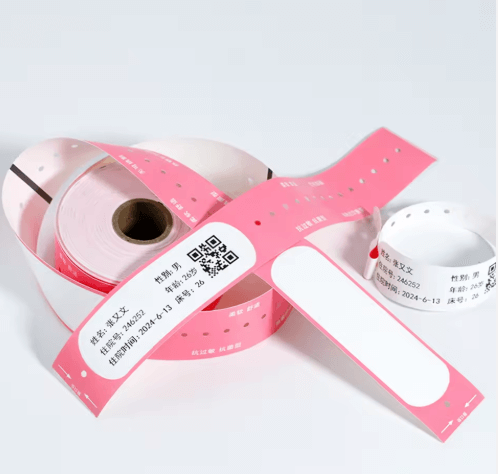
Core Materials Used
Medical Wristbands used in Canada are typically produced from three primary material categories, selected based on clinical duration, workflow intensity, and environmental exposure.
Vinyl Medical Wristbands are widely used in Canadian hospitals due to their durability, flexibility, and waterproof performance. Medical-grade vinyl is latex-free and suitable for long-term inpatient use, including surgical wards and emergency departments.
PET-based materials are commonly used for Thermal Printing Wristbands. PET Medical Wristbands provide consistent thermal response and high-quality barcode printing, making them ideal for clinics, laboratories, and outpatient environments where scan accuracy is essential.
Tyvek wristbands are occasionally deployed for short-term identification, such as outpatient procedures or temporary screening programs. However, their lower resistance to moisture limits their suitability for extended hospital use.
RFID Medical Wristbands integrate embedded inlays within vinyl or PET substrates, supporting contactless identification and patient flow management in digitally advanced Canadian healthcare facilities.
Material Performance Characteristics
Performance requirements for Medical Wristbands in Canada are driven by real-world healthcare conditions.
Waterproof and chemical resistance are essential. Wristbands must remain legible after repeated exposure to handwashing, alcohol wipes, and disinfectants commonly used in Canadian hospitals. Waterproof Latex-free Wristbands reduce replacement frequency and misidentification risks.
Print stability is critical for Barcode Wristbands. Thermal Printing Wristbands must maintain high contrast and barcode integrity throughout patient stays to support medication administration and specimen verification.
Mechanical durability and secure closure systems help prevent accidental removal or tampering, supporting accurate patient identification during transfers between departments.
Patient comfort and biocompatibility are particularly important in long-term care, pediatric units, and maternity wards where wristbands may be worn continuously.
fulida Case Study — Canadian Healthcare Application
A regional hospital network in Canada reported challenges with frequent wristband replacements caused by barcode fading and material degradation. These issues increased nursing workload and introduced risks during medication administration.
Fulida conducted a material evaluation and recommended a vinyl-based Thermal Printing Wristband engineered for improved waterproof performance and print longevity. The wristbands were fully latex-free and compatible with existing thermal printers used across the hospital network.
After implementation, the hospital observed improved barcode scan reliability, reduced wristband replacement rates, and smoother clinical workflows. The solution was subsequently expanded to outpatient clinics and affiliated laboratories.
Material Parameter Table
| Parameter | Vinyl Medical Wristbands | PET Medical Wristbands | RFID Medical Wristbands |
|---|---|---|---|
| Waterproof Performance | Excellent | Excellent | Excellent |
| Chemical Resistance | High | High | High |
| Thermal Print Compatibility | Good | Excellent | Good |
| Barcode Durability | High | Very High | High |
| RFID Capability | No | Optional | Yes |
| Skin Safety | Latex-free | Latex-free | Latex-free |
| Typical Use Duration | Medium to Long Term | Short to Medium Term | Medium to Long Term |
Application Scenarios Across Canadian Healthcare
Medical Wristbands are used throughout Canadian healthcare systems.
In hospitals, Barcode Wristbands support medication administration, patient transfers, and surgical verification. Emergency departments rely on durable vinyl wristbands to withstand high patient throughput.
Clinics and outpatient centers benefit from PET-based Thermal Printing Wristbands that integrate efficiently with electronic medical record systems.
Laboratories use barcode-compatible wristbands to maintain specimen traceability and reduce identification errors.
Advanced facilities increasingly deploy RFID Wristbands for patient tracking and access control.
FAQ
What materials are most suitable for Medical Wristbands in Canada? Vinyl and PET materials are preferred due to their durability, waterproof performance, and print stability.
Are latex-free wristbands required in Canadian healthcare? Latex-free materials are strongly recommended to minimize allergy risks and support patient safety.
Can Fulida wristbands work with existing Canadian hospital printers? Fulida Thermal Printing Wristbands are engineered for compatibility with commonly used thermal printers in Canada.
Why Choose Fulida
Fulida is an experienced OEM supplier of Medical Wristbands for the Canadian market. With a strong focus on material engineering and print performance, Fulida delivers Patient ID Wristbands that support safety, workflow efficiency, and long-term reliability.
By offering barcode and RFID-compatible wristband solutions tailored to Canadian healthcare environments, Fulida helps healthcare providers reduce misidentification risks and improve patient care outcomes.