
Introduction
Large-scale sports venues host tens of thousands of spectators within short time windows, creating extreme pressure on access control systems. Ticket validation, security screening, re-entry management, and zone-based permissions must operate with speed and precision to avoid congestion, safety risks, and revenue leakage. Traditional paper tickets and visual wristband checks are increasingly insufficient for modern stadium operations.
RFID wristbands have emerged as a critical infrastructure component for sports event access control. Beyond basic identification, they enable real-time authentication, automated gate throughput, data-driven crowd monitoring, and seamless integration with venue management systems. From an engineering perspective, RFID wristbands must balance RF performance, mechanical durability, wearer comfort, and environmental resistance. Fulida approaches RFID wristband design as a system-level engineering problem, combining material science, antenna optimization, and manufacturing consistency to support large-scale sports venues.
Core Materials Used
Material selection directly influences both user experience and RFID system performance. Sports events impose harsh mechanical conditions, including repeated flexing, sweat exposure, rain, friction, and physical impact during crowd movement.
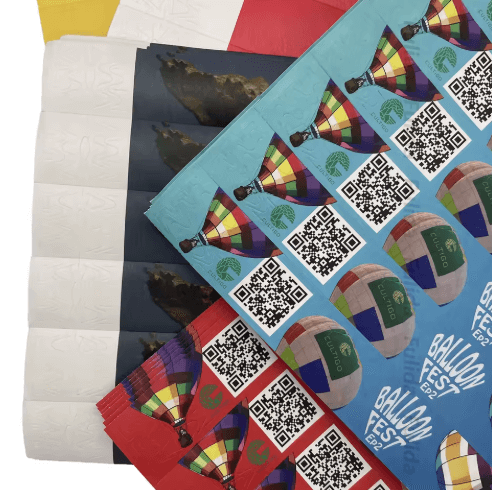
Vinyl wristbands are commonly used for short- to mid-duration sports events. Vinyl provides high tear resistance, waterproof performance, and compatibility with embedded RFID inlays. Its dimensional stability supports consistent antenna geometry, which is critical for predictable read ranges at access gates.
Fabric wristbands are selected for multi-day tournaments, VIP zones, and season-long credentials. Woven or polyester-based fabrics improve wearer comfort and breathability while accommodating sewn-in or laminated RFID inlays. These materials are engineered to minimize signal attenuation caused by moisture absorption and body proximity.
For temporary or single-day sporting events, waterproof synthetic substrates and laminated constructions may also be used. Fulida selects materials based on event duration, expected mechanical stress, and required RFID performance stability across varying environmental conditions.
Material Performance Characteristics
RFID wristbands for sports venues must maintain stable RF characteristics while enduring continuous mechanical stress. Performance evaluation therefore extends beyond visual durability to include electromagnetic and structural behavior.
Key performance characteristics include resistance to tearing and delamination under tensile stress, waterproof integrity against sweat and rain, and abrasion resistance from repeated contact with clothing and equipment. Equally important is the preservation of antenna geometry under bending and twisting, as deformation directly affects resonance frequency and read reliability.
Fulida evaluates material behavior using Thermal FEM to simulate dimensional stability under temperature variations caused by outdoor events and body heat. Antenna performance is verified through HFSS simulation, allowing optimization of impedance matching between the RFID chip and antenna within the selected wristband material stack. TDR-based testing is applied to confirm consistency in antenna trace continuity during mass production, ensuring uniform read performance across large production batches.
fulida Case Study — Sports Venue RFID Access Control
Customer Background
A regional sports authority operating multiple large stadiums required an access control upgrade for football and athletics events with attendance exceeding 50,000 spectators. The existing barcode-based ticket system suffered from slow gate throughput, counterfeiting risks, and limited real-time visibility into crowd movement.
Engineering Challenges
The customer required RFID wristbands capable of supporting high-speed gate reads while remaining durable under crowd pressure and outdoor weather. Wristbands needed to integrate with existing RFID readers and backend systems without increasing gate complexity. Signal interference caused by dense human presence was a key concern.
Fulida Solution
Fulida recommended waterproof RFID wristbands using a reinforced vinyl construction with embedded UHF RFID inlays. Antenna geometry was optimized through HFSS simulation to compensate for detuning effects caused by proximity to the human body. Material layers were selected to maintain antenna spacing and reduce dielectric variability.
Thermal FEM analysis verified material stability during prolonged outdoor exposure, while ADS-based RF validation ensured reliable coupling between wristbands and fixed gate readers. Controlled lamination processes were implemented to maintain antenna alignment during high-volume production.
Outcome
The venue achieved faster gate throughput with significantly reduced queue times during peak entry periods. Unauthorized access incidents decreased due to secure RFID authentication, and real-time attendance data enabled dynamic staffing and crowd flow optimization. The RFID wristbands performed reliably across multiple events without material or RF degradation.
Material Parameter Table
| Parameter | Vinyl RFID Wristbands | Fabric RFID Wristbands | Synthetic Waterproof Wristbands |
|---|---|---|---|
| Typical Thickness | 250–350 μm | 300–500 μm | 200–300 μm |
| Water Resistance | Excellent | Good | Excellent |
| Flexibility | Medium | High | Medium |
| Tear Resistance | High | Medium–High | Medium |
| RFID Integration | Embedded Inlay | Sewn or Laminated Inlay | Laminated Inlay |
| Wear Duration | 1–3 Days | Multi-Day / Season | Single-Day |
| Typical Application | General admission | VIP, staff, athletes | Temporary events |
Application Scenarios Across Sports Events
RFID wristbands are deployed across a wide range of sports venue scenarios. General admission gates rely on high-speed UHF RFID wristbands to process large crowds efficiently. VIP and hospitality zones use fabric RFID wristbands to enable zone-based access control and re-entry privileges.
Staff and contractor identification utilizes durable RFID wristbands with extended wear comfort and role-based permissions. For multi-day tournaments, RFID wristbands support attendance tracking, credential validation, and integration with cashless payment or loyalty systems. Across these scenarios, consistent RF performance and mechanical reliability are essential for operational continuity.
FAQ
Are RFID wristbands suitable for outdoor sports venues?
Yes. Waterproof constructions and validated materials ensure reliable performance under rain, sweat, and temperature variation.
Which material is better for large crowds, vinyl or fabric?
Vinyl offers higher tear resistance for dense crowds, while fabric provides better comfort for extended wear. Selection depends on event duration and crowd dynamics.
Do RFID wristbands work near the human body?
Yes. Antenna designs are optimized to compensate for body-induced detuning effects.
Can RFID wristbands support re-entry control?
Yes. Unique RFID identifiers enable secure re-entry validation and zone-based permissions.
Is large-scale production consistency ensured?
Yes. TDR and RF validation methods are applied to maintain antenna and inlay consistency across batches.
Are wristbands compatible with existing RFID systems?
Fulida designs wristbands to align with standard UHF RFID protocols used in event infrastructure.
Contact
RFID wristbands have become a foundational technology for access control in large-scale sports venues, enabling faster entry, improved security, and actionable operational data. Through engineered material selection, antenna optimization, and simulation-based verification, Fulida delivers RFID wristbands that perform reliably under the mechanical and environmental stresses of major sporting events. By integrating RF design, manufacturing control, and system-level validation, Fulida supports venue operators in building scalable, secure, and efficient event access control systems. For technical consultation or custom RFID wristband solutions tailored to sports venues, Fulida provides engineering-focused support aligned with real-world event conditions.